
By Alimey Díaz
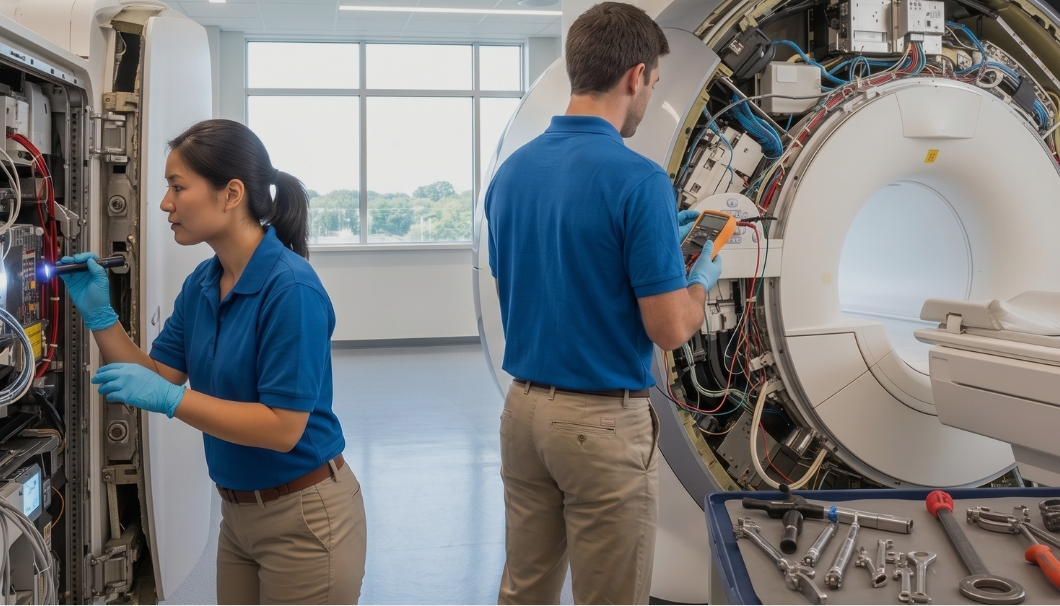
Reliability and asset management are cross-functional strategies in all types of organizations. When it comes to the health and medical care sector, the disciplines that make up asset management take on an added layer of sensitivity, since the well-being of millions of people depends on the proper management of assets, complex equipment, and facilities, among other things. Within asset management, industrial maintenance plays an essential role, and in hospital settings, it involves engineering and maintenance in the service of health and life.
Asset management, in its broadest sense, is understood as the set of strategies that enables organizations to obtain the best performance and value from assets throughout their lifecycle. In the hospital setting, achieving this optimal performance is vital in the broadest sense of the word. In addition to the reliable operation of equipment, hospital facilities management is also crucial, as the interrelationship between these elements is part of the hospital ecosystem.
Healthy Assets Supporting Health
Maintenance strategies and plans form the foundation for the proper functioning of assets in hospital settings, encompassing both equipment and facilities. Let’s consider a few points:
- Healthcare facilities must have protocols for equipment maintenance, prevention, and calibration in accordance with both technical requirements and the healthcare environment.
- These protocols will be divided into broad areas that encompass maintenance activities; the most important are:
- Maintenance of Physical Facilities (water quality systems, waste disposal, plumbing, elevators, fire extinguishers, emergency lights, among others)
- Biomedical Equipment Maintenance (calibrations, software updates)
- Industrial Equipment within Hospitals and Healthcare Facilities (boilers, electrical systems, HVAC systems)
- IT Services (which contain all medical, technical, and accounting information)
- Maintenance protocols will establish the criticality level of assets using asset management and clinical engineering approaches. Within clinical engineering, the criticality that determines maintenance frequency is divided into: Critical Equipment (related to patient life support), Semi-Critical Equipment (related to facilities), and Non-Critical Equipment (low-use equipment). The more frequently equipment is used and the more closely it is related to life support, the more critical it is considered to be and this defines the frequency of maintenance.
- The strategies will determine the types of maintenance: preventive, corrective, calibrations, technical verification, among others.
- Every strategy will always include traceability, record-keeping, and a history of maintenance actions.
All these actions, organized and carried out according to the needs and strategies of each healthcare facility, ultimately aim to ensure patient well-being and safety, support healthcare staff in their daily duties, extend the useful life of equipment and facilities, enable increasingly accurate medical diagnoses, and maintain the hospital environment in optimal conditions.
Technology for Life
Technology plays an essential role in the success of all these strategies. CMMS systems serve as a tool to centralize inventories, track the lifecycle and history of assets and optimize their performance, manage preventive maintenance, manage work orders, conduct data analysis and generate reports, manage inventories, and ensure compliance with regulations specific to this activity.
In addition to having their own maintenance departments, hospitals often rely on external providers for specialized maintenance services, due to the complexity of biomedical equipment.
Other disruptive technologies have a wide range of applications in the healthcare sector: IoT for monitoring the status of supplies and facilities, as well as tracking, monitoring, and locating them.
Digital Twins simulate scenarios to optimize the entire hospital system, ensuring at all times patient well-being, energy efficiency, healthcare safety, and financial control, among other aspects.
Maintenance Protocols in Medical Settings
For companies specializing in the maintenance and inspection of medical equipment, there are several distinctions that are important to understand:
- Medical Equipment Maintenance Protocol: defines maintenance management
- Medical Equipment Maintenance Plan: defines the practical application of the protocol to the equipment to be maintained
- Technical Maintenance Guidelines: define the set of specific maintenance tasks for a particular group of medical equipment within a defined timeframe, in accordance with the Maintenance Protocol
- Every maintenance plan must include KPIs that measure the plan’s efficiency
- Each plan must specify roles and technical responsibilities, documentation and recording of activities and incidents, maintenance frequency, data storage, recommendations, and continuous improvement.
For specialized providers of these types of services, failing to understand these distinctions can lead to the application of generic protocols that are not tailored to the needs of the clinical environment, maintenance tasks that will not deliver the expected results, or problems with traceability and tracking of maintenance, inventory, or essential spare parts for healthcare equipment. As we mentioned at the beginning of this article, maintenance as part of asset management requires greater sensitivity and commitment when it comes to the medical field.
Risks of Lack of Maintenance in Clinical and Hospital Settings
It may seem obvious, but a lack of maintenance on medical equipment is closely linked to patient safety and survival:
- Improperly calibrated equipment will lead to inaccurate diagnoses
- Inaccurate diagnoses put patients’ health at risk (incorrect administration of medical treatments, poor quality images that hinder diagnosis, inappropriate radiation doses for cancer patients, among others)
- Sudden failures in life-support equipment endanger patients’ lives
- A poor maintenance plan also jeopardizes the healthcare facility’s reputation, an intangible asset that is very difficult to restore in the medical field
- Risks of infection and other serious biological hazards due to inadequate treatment of domestic hot water (DHW), potable water systems, blackwater, and hospital sewage
- Poor air conditioning jeopardizes indoor air biosafety
- Costly repairs due to reactive maintenance
- Reduced service life of medical equipment
- Obsolete equipment and operational inefficiencies increase maintenance costs
- Cybersecurity risks
- Financial impacts, penalties, and closures. Healthcare facilities without efficient maintenance protocols face fines and lawsuits
Conclusions
This article provides a brief overview of the impact of maintenance and asset management in the medical and healthcare setting. Patient health, the effective performance of medical teams, accurate diagnosis, the safety of facilities, and the proper functioning of services all depend on a sound maintenance plan grounded in an asset management approach.
By their very nature, biomedical devices are complex and require specialized maintenance performed by qualified personnel; however, the principles of maintenance are almost always the same, and they all share the same goal: to ensure the optimal functioning of equipment and facilities so that, in this case, they can fulfill a vital function, sustaining the lives and well-being of patients, alleviating pain, and promoting health.
This article has reached you thanks to the efforts of the Association of Asset Management Professionals (AMP) to raise awareness and create demand for asset management worldwide. In this case, our article on industrial maintenance highlights the impact of this role when it is linked to sustaining life. If you’d like to continue advancing your maintenance career, explore our Certified Maintenance Manager certification, which you can find here
Sources:
https://autocontrolsistemas.com/
https://electromedicinabarcelona.com/protocolo-de-mantenimiento-de-equipos-medicos/
https://www.agenormantenimientos.com/mantenimiento-equipamiento-medico-electromedicina https://revista.aem.es/noticia/diagnostico-del-sistema-de-gestion-de-activos-bajo-la-norma-iso-55001