
By Terrence O'Hanlon, Creator, Uptime® Elements
This is not written for the executive who can mandate a program across twelve plants. It is not written for the consultant with a slide deck. It is written for the person three desks from engineering, with no title yet, who has decided to start anyway. If that is you, read Honda’s story for what it proves, and read the Leader’s move after each section for what you can do with it.
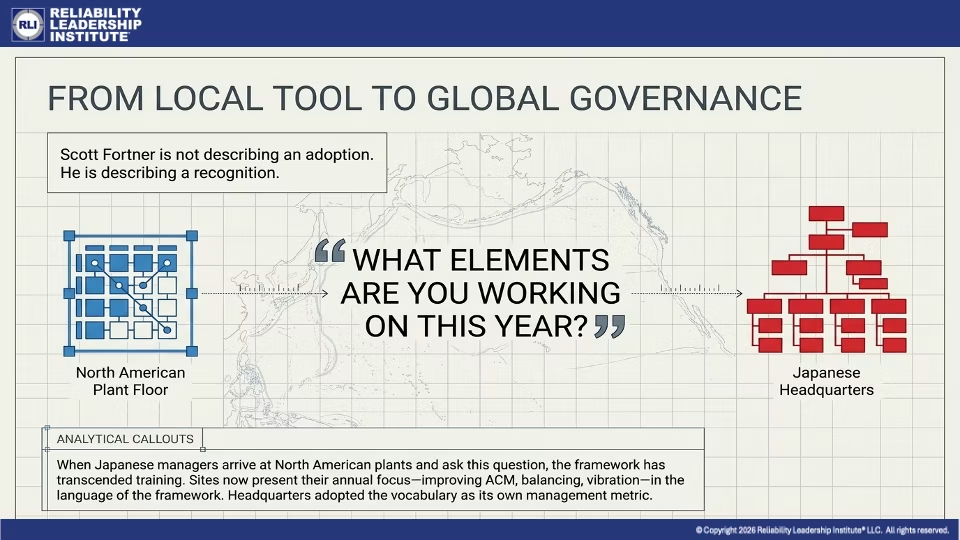
When a Japanese manager arrives to co-lead a Honda plant in North America, one of the first questions he now asks is not about output or cost. It is this: What elements are you working on this year?
That question did not come from a consultant. It did not come from a training vendor. It travelled up from the plants, crossed the Pacific, and came back as a management question from headquarters.
Scott Fortner has watched it happen. He began his maintenance career in Honda’s stamping department in 2001. He worked through aluminum machining, weld and assembly. He became a plant reliability leader in April 2018, and today he leads reliability engineering for maintenance across Honda North America. Sitting down for The Stand at IMC, he was asked what results the framework had produced. He did not quote a downtime number. He described presentations.
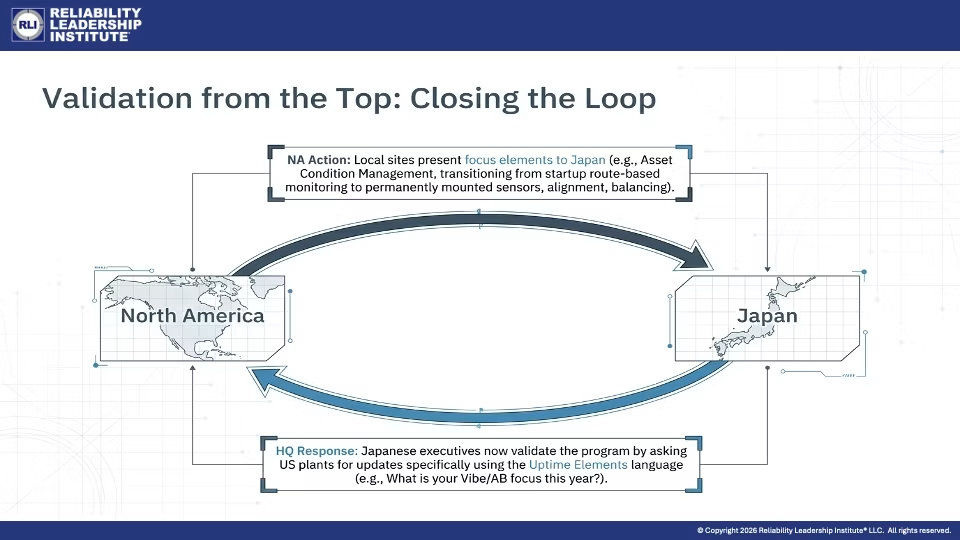
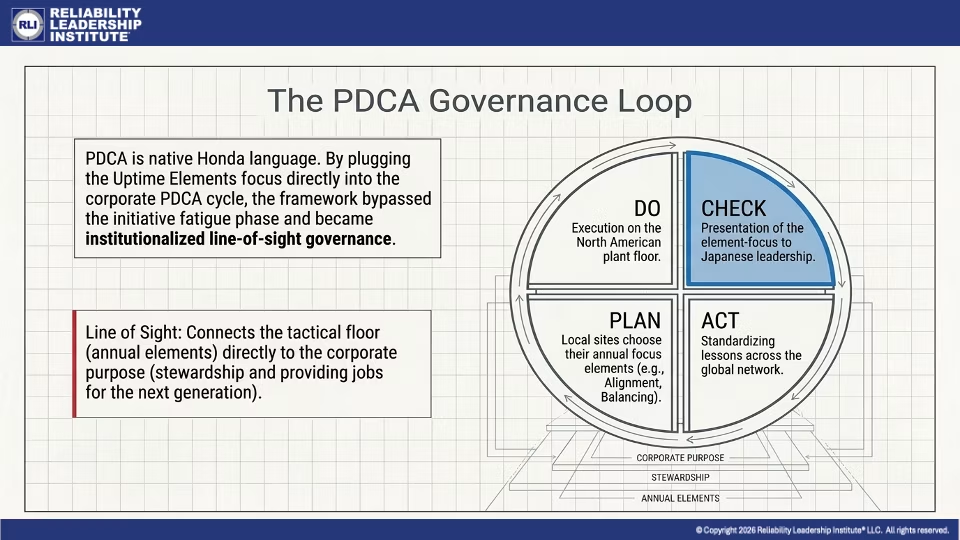
Sites now tell leadership, in element language, what they will work on. We are going to improve asset condition management this year. We are going to train our people, start route-based, then move to permanently mounted sensors. We are going to focus on alignment. We are going to focus on balancing. Then it reaches Japan, and Japan starts asking the question back.
That is the moment a framework stops being a training program and becomes the way a company governs itself.
The question that crossed the ocean
The common story about reliability frameworks is adoption: a new system imposed on an old culture, resisted, and slowly accepted. Honda’s story runs the other way. Asked whether joining Uptime® Elements thinking to Honda thinking created problems, Fortner said simply, no.
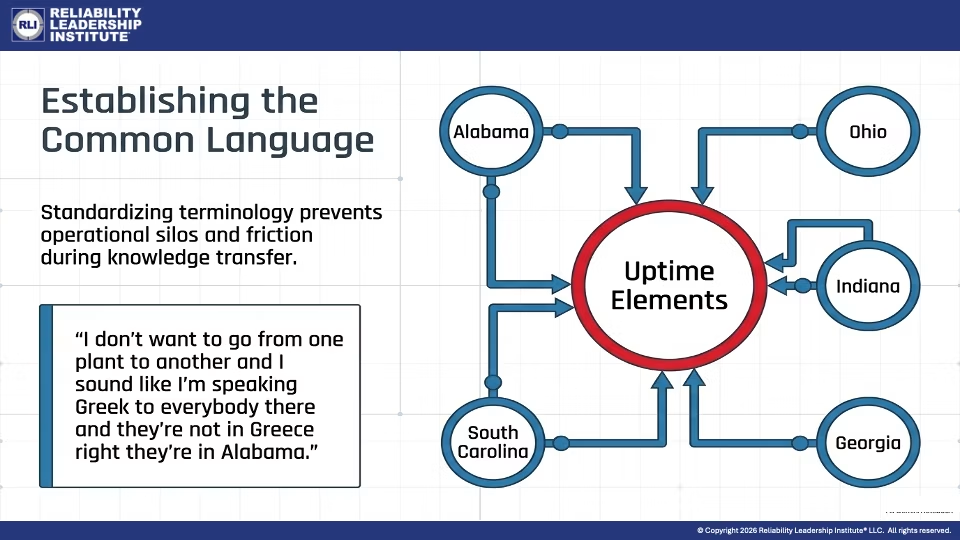
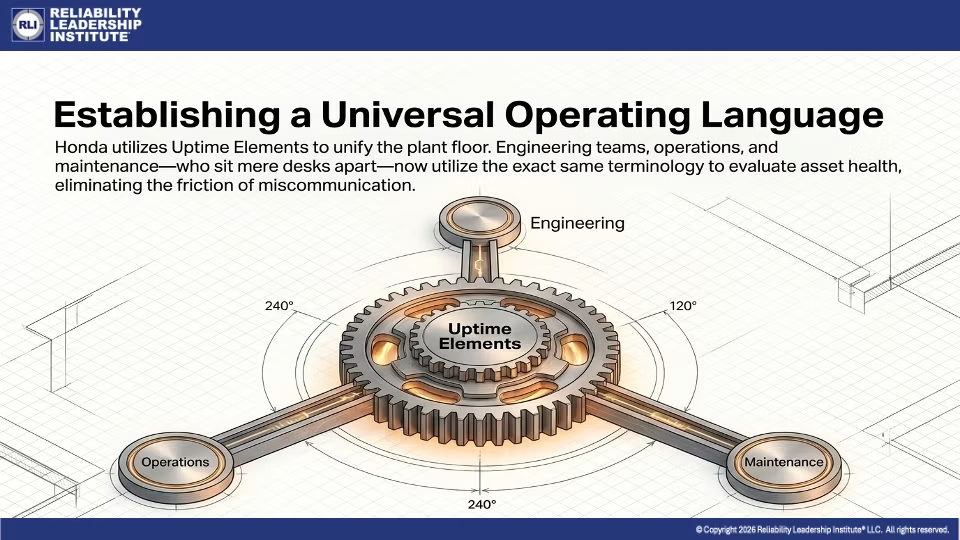
Honda did not adopt the framework. It recognized itself in it. What the framework supplied was not the values. Honda had those. It supplied the words, so that a reliability leader in Alabama and a manager from Japan could describe the same work the same way. “I don’t want to go from one plant to another and sound like I’m speaking Greek,” Fortner said. “They’re not in Greece. They’re in Alabama.”
Leader’s move. Ask the Honda question in your own next meeting, even if you are the most junior person there: Which element are we working on this year? If nobody can answer, you have found your starting point.
Talk it over.
-
If a visitor asked your site that question tomorrow, who would answer, and what would they say?
-
Where does your site already describe the same work in different words from the plant down the road?
A culture already running the framework
Everybody at Honda knows the Honda production way. Everybody knows PDCA. Root cause analysis is embedded in the culture: Why analysis, Ishikawa, five principles for problem solving that have been practiced for years.
Honda is at-the-spot oriented. When something fails, you go to the spot. You see the real situation, the real problem, and you talk to the real people associated with it. Reliability is not managed from an office.
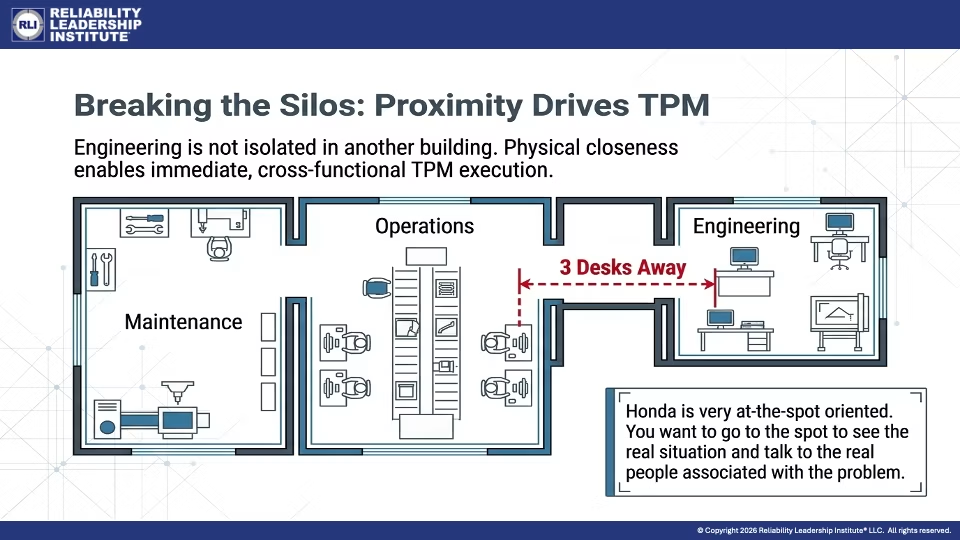
The engineering team in the maintenance departments where Fortner has worked sits three desks away. Not in another building. Operations meets with them. Under those conditions a TPM team is not an initiative. It is simply what happens.
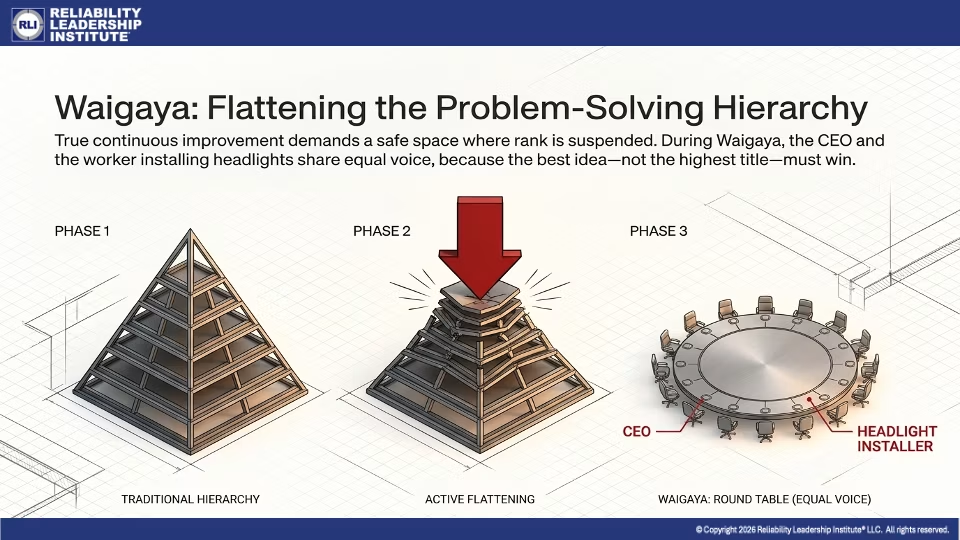
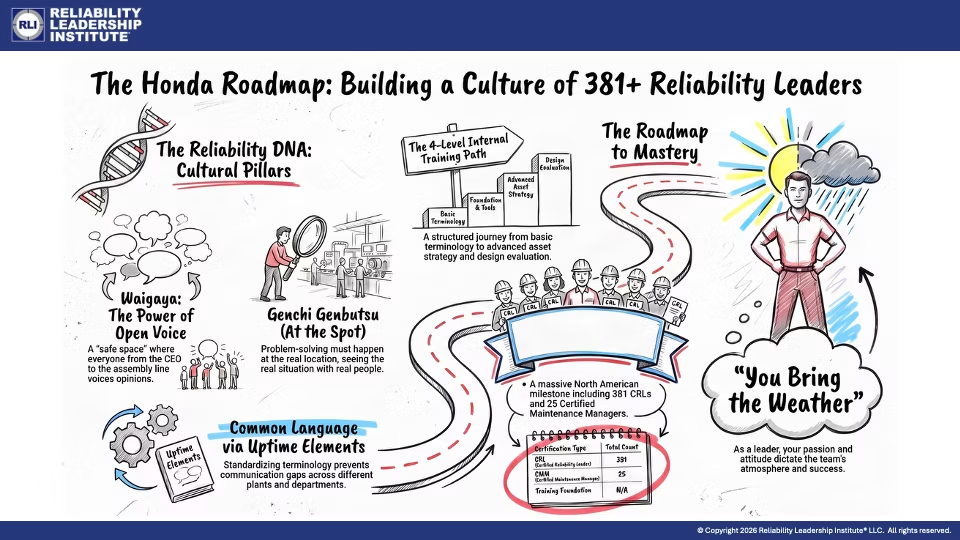
Then there is waigaya. Everybody can get in the room. It is a safe space. Everybody has an opinion and can voice it, “and it doesn’t matter if you’re the CEO or you’re the guy that installs headlights. Your voice matters, because respect for the individual is huge.”
Listen to what Fortner says next, because he says it without being asked. Honda has integrity in its culture. It wants people to be authentic. It wants everybody to take responsibility for their job, “because today’s job, how well we do that, means tomorrow’s job is there for the next generation.”
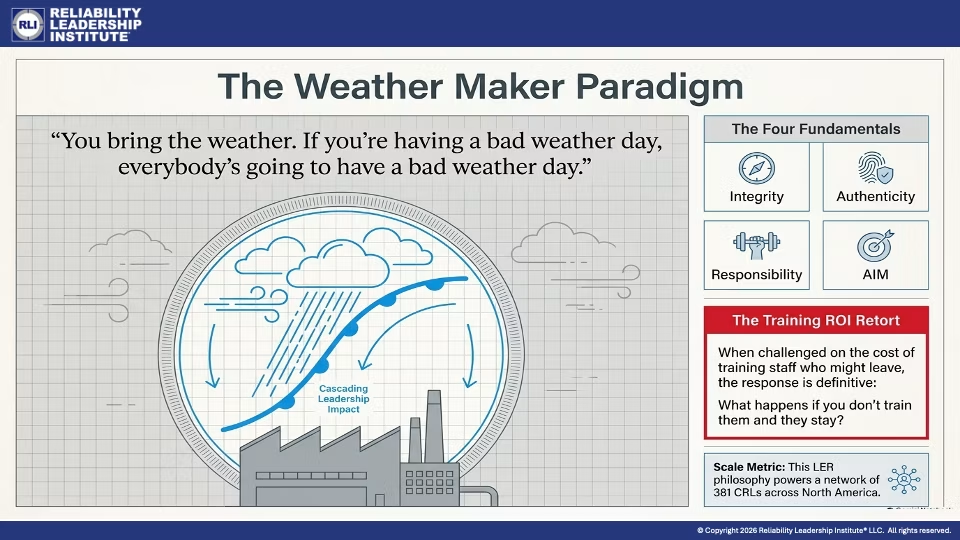
Integrity. Authenticity. Responsibility. And a purpose larger than the shift: the next generation’s job. Those are the Four Fundamentals of reliability leadership, named in a single breath by a man describing his employer’s culture. Nobody taught him that list. He was already living it.
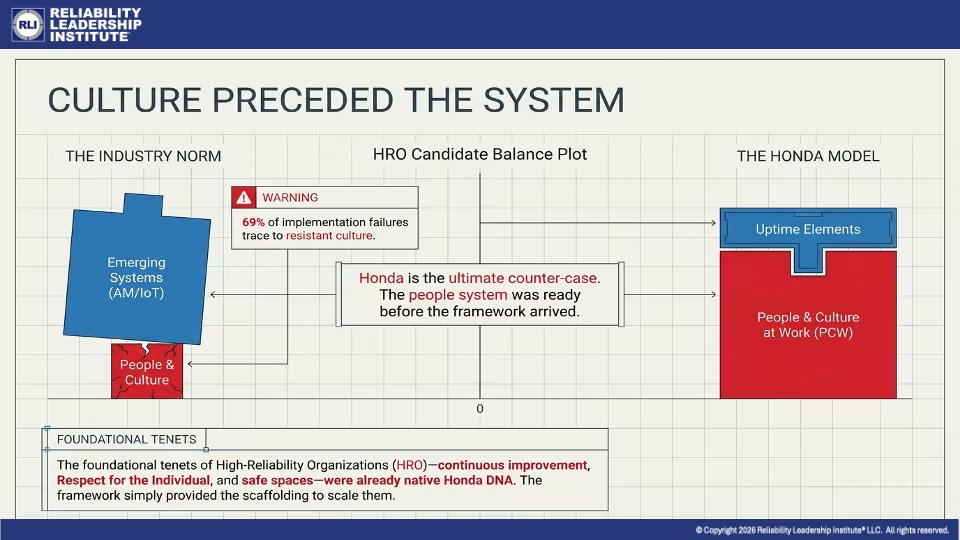
This is why Honda matters to everyone else. Roughly 69 percent of reliability implementation failures trace to people and culture. Honda is the counter-case: the people system was ready before the framework arrived.
Leader’s move. You cannot install waigaya by memo, but you can run one meeting like it. The next time a problem is discussed, ask the person closest to the equipment to speak first, and do not let anyone senior interrupt until they finish.
Talk it over.
-
Which of integrity, authenticity and responsibility would your team say you model most? Which least?
-
How many desks, or buildings, sit between your maintenance and engineering teams?
Translate, don't overwrite
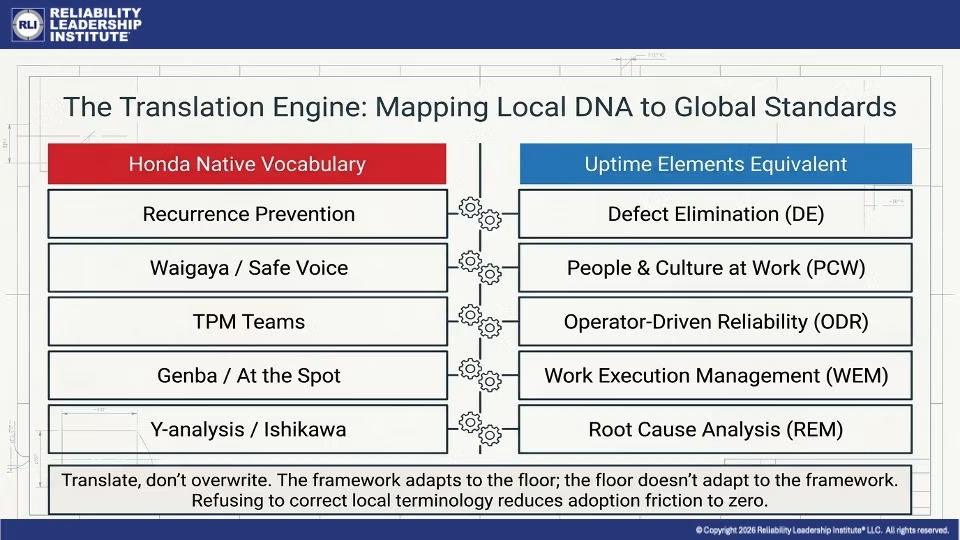
The only adjustment Fortner describes is language. Honda’s engineering groups do not talk about defect elimination. They talk about recurrence prevention.
“That’s the whole point of defect elimination anyway,” he said. “I won’t correct somebody on calling it recurrence prevention.”
There is a practical reason for restraint. Honda is, in his words, a very acronym-driven company, and acronyms collide. In the engineering groups, DE means design engineering. In the reliability program, DE means defect elimination. You have to know your audience to know which one you are hearing.
This is a small moment in the interview and a large lesson for anyone leading an implementation. The framework does not ask a strong culture to give up its words. It asks the culture to connect its words to a shared map. A leader who insists on the framework’s vocabulary wins an argument and loses the room. A leader who translates keeps both.
Leader’s move. Before you teach a single element, learn what your site already calls it. Start the translation table in the 30-day plan below this week.
Talk it over.
-
Which framework term would your engineers resist, and what do they already call that work?
-
Which acronym at your site means two different things to two different groups?
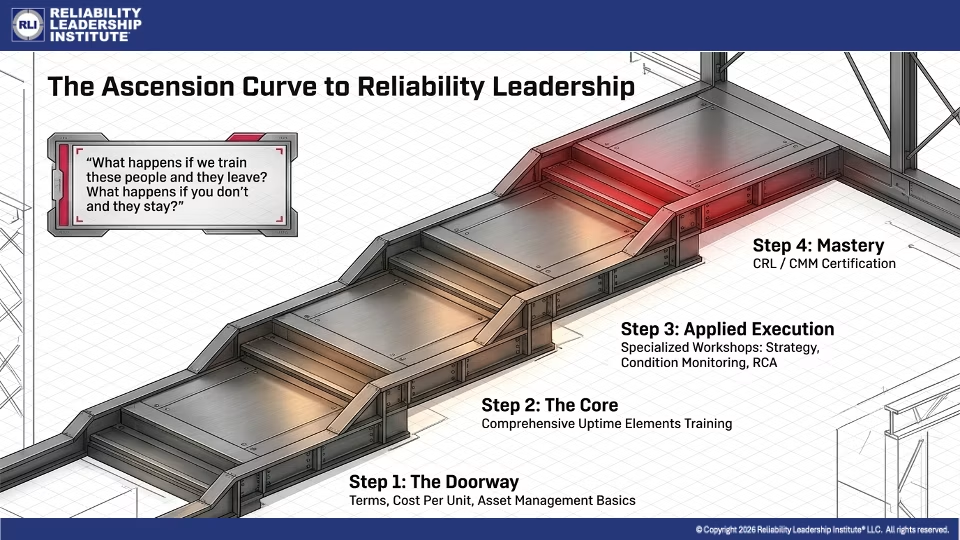
The road in the door
Honda built its training program in the language of Uptime Elements, and it put one rule at the front of it. Everybody starts with the Uptime Elements program. “They have to finish that,” Fortner said. Only then do they enter Honda’s own training, and after that the advanced levels.
He calls the whole of it a roadmap to reliability. At the start, people learn what the terms mean, how Honda manages its assets, and how it monitors them using cost per unit as the basis. They work their way up through higher levels toward the CRL. Then come role workshops for reliability leaders, condition specialists, work execution and leaders, “to teach you how to do your job the right way.” A reliability engineer new to the department gets specific training in developing strategy, and in something most manufacturers never teach at all: how to evaluate a design to know it is reliable.
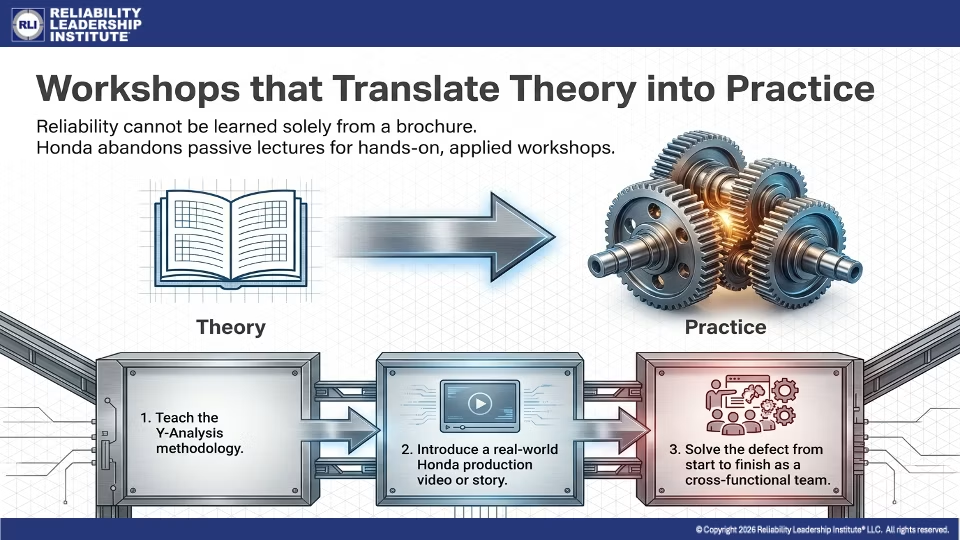
Honda calls these sessions workshops, not training, and the distinction is deliberate. A little discussion, then practice. Fortner’s own root cause workshop teaches Why analysis, then puts it to work on a real Honda failure, with the videos and the story, worked from start to finish. He has delivered his workshop around fifty times over Zoom since the pandemic, and he still lights up delivering it live. “There’s nothing like talking reliability with somebody for the first time.”
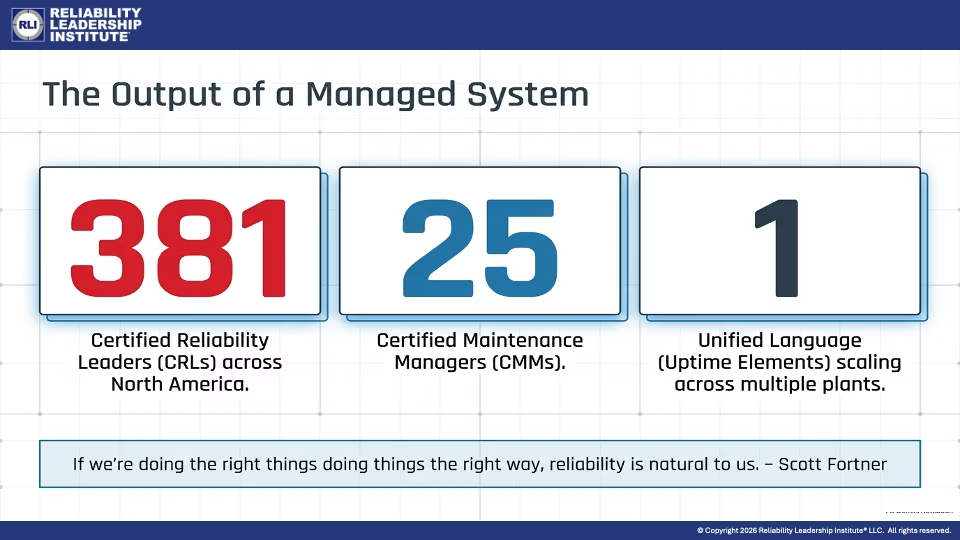
The scale is the part other companies notice. As of the 2023 interview, Honda North America had 381 Certified Reliability Leaders and 25 Certified Maintenance Managers.
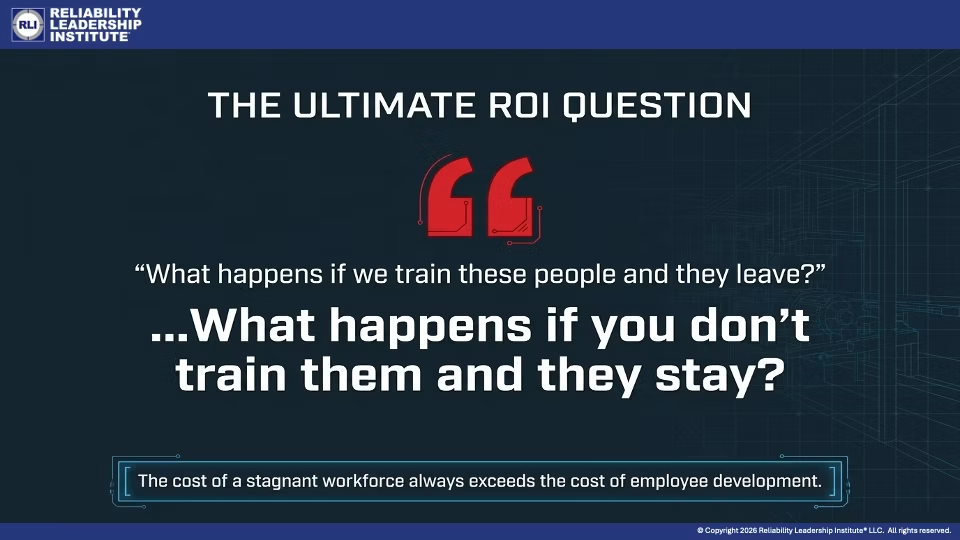
At the same conference, Fortner heard two or three people from different companies repeat their bosses’ objection to training: What happens if we train these people and they leave? His answer is the one every reliability leader should carry into the next budget meeting.
What happens if you don’t train them, and they stay?
Leader’s move. Ask to run one practice-based root cause session on a real failure from your own site, with its real evidence. Keep the method talk under twenty minutes. The practice is the lesson.
When the budget question comes, you can borrow Fortner’s answer and add your own evidence: “I understand the risk that trained people leave. The larger risk is that untrained people stay, and keep producing the failures we are paying for now. Here is last quarter’s list.”
Talk it over.
-
What is the first thing a new technician at your site learns? Is it a shared language, or a list of local habits?
-
Which recent failure at your site would make the best practice case, and who holds the evidence?
Two generations, one reason
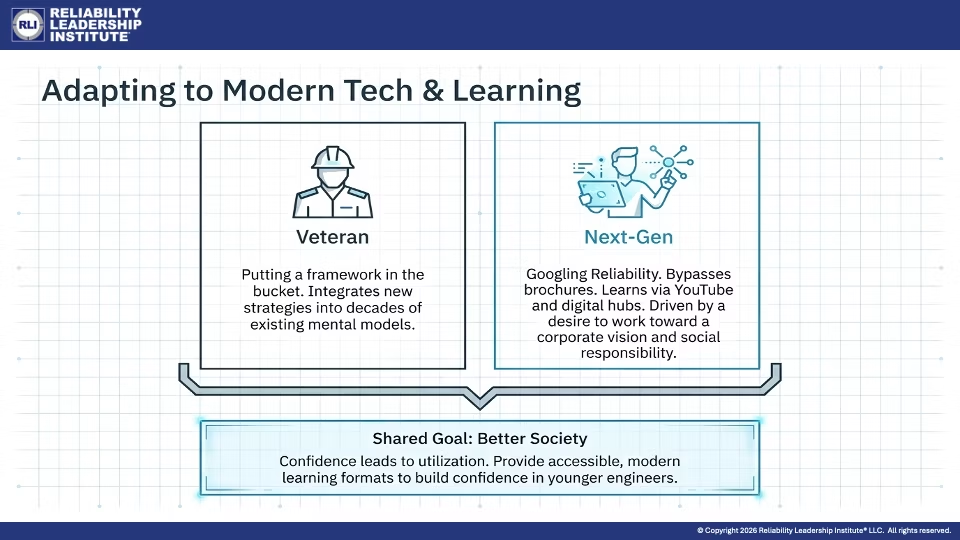
Not everyone on the plant floor meets the framework the same way. For some of the older generation, Fortner admits, it is one more thing in the bucket.
The younger generation is different. They can search for reliability and find a world of material waiting: articles, videos, learning sites built by companies who figured out that teaching people is more effective than handing them brochures. It is not hard to sell something they can find and watch on their own.
But the deeper draw is not the search bar. Younger people at Honda, Fortner said, want to work toward a goal and a vision. They want to feel part of something larger, part of a better society. Honda gives them that.
Leader’s move. Do not sell the framework to the veteran who calls it one more thing in the bucket. Show them it names what they already do: their inspection route is asset condition management; their “never again” fix is defect elimination. For younger colleagues, point to the free material they can find on their own, then give them the larger reason.
Talk it over.
-
Who is the most respected veteran at your site, and what practice of theirs is already an element?
-
What is the larger purpose your site’s work serves, in one sentence a new hire would believe?
You bring the weather
Fortner’s reliability work starts before Honda. He came from the Air Force, and he describes a single through-line: “I have always wanted to do the right things.” If you are doing the right things, and doing them the right way, he said, “reliability is natural to us.”
Asked what advice he would give anyone starting the journey, or halfway down it, he reached for something an old boss at Honda told him. As a leader, you bring the weather for the day. Bring a bad day into the room and everybody has a bad day. So when you talk reliability, bring your passion with you.
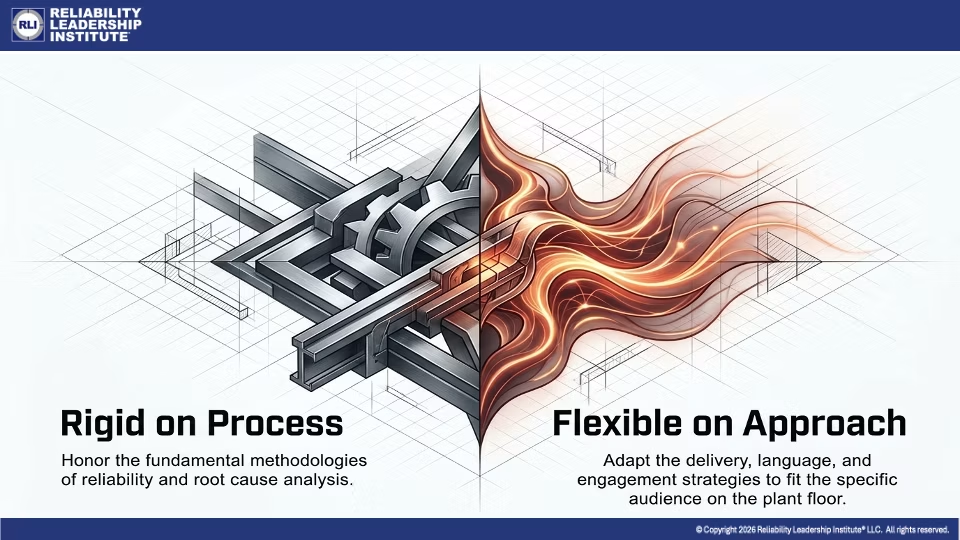
And then the line that holds the whole interview together. Be rigid on processes and methods. Be flexible on approach.
That is what Honda did with Uptime Elements. It was rigid about the gate at the door and the common language behind it. It was flexible about the words its engineers already loved. The result is a framework that did not have to be imposed, because it was recognized.
You do not need Honda’s culture to make Honda’s move. You need to be rigid about one small thing and flexible about everything around it. And you need to be the one who brings the weather tomorrow morning.
Leader’s move. Before your next meeting, decide what weather you are bringing. After it, ask one person how the room felt.
Is your culture ready?
Five yes-or-no questions. Answer for your site as it is today, not as the policy manual describes it.
-
[ ] In a problem-solving meeting, can the person closest to the equipment speak before the most senior person, and be heard?
-
[ ] Do maintenance and engineering talk most days, without a ticket or a meeting request?
-
[ ] Does your site share one problem-solving method that most people could name?
-
[ ] Can you name the element your site is focused on this year?
-
[ ] Does anyone above you ever ask about it?
Four or five yes: your culture is closer to Honda’s than you think. The common language is your next step. Two or three: start with the meeting and the translation table; the culture will follow what gets practiced. One or none: you have found the most valuable work in the building. Start with the weather.
This is a conversation starter, not an assessment. A full picture of where your site sits on the Uptime® Elements Maturity Matrix comes from a GPS assessment.
Your next step
Honda’s 381 Certified Reliability Leaders each started where you are. The CRL pathway turns your reliability journey into a credential: your translation table, element declaration and worked case are exactly the kind of evidence it asks for.
Bring what you build to the community. Share your translation table or your element declaration on Uptime® Elements Live: The Extended Body of Knowledge, and compare notes with leaders who have made the same move at their sites.
Know. Be. Do. And create a future that was not going to happen anyway.