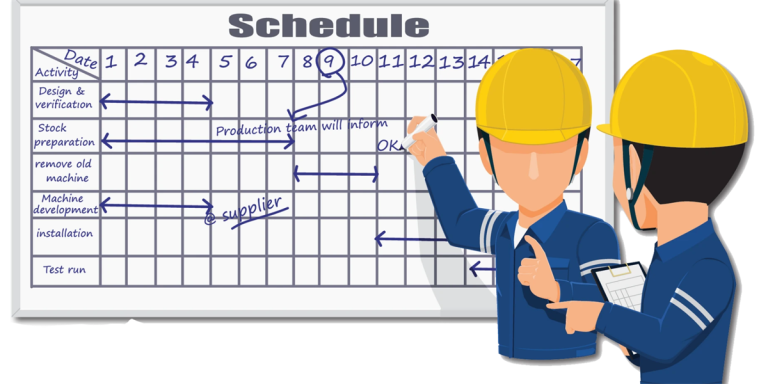


Scalable automation, autonomous mobile robots (AMRs), the Internet of Warehouse Things (IoWT), warehouse management systems (WMS), sustainability, and disruptive technologies are emerging as growing trends in the warehouse landscape. Despite these operational and financial advantages, only a quarter of warehouses in the United States are expected to have some level of automation by 2027.
By Alimey Díaz / Journalist and Technical Writer
In Asset Management, the organization is an ecosystem where all the elements that comprise it are integrated, interacting and working within a set of strategies aimed at achieving the objectives of that organization. The Asset Management approach simultaneously considers the performance of all assets in a longitudinal manner to extract the greatest value from each of them, with operational excellence, safety, and sustainability.
The constant development of technology and markets means that Asset Management frequently adjusts its strategies, keeping companies healthy and profitable. An important part of this ecosystem is the Warehouse and the Supply Chain, whose functions have been enhanced and improved by agentic AI and other disruptive technologies. In this article, we analyze some trends and the advantages of new technologies.
Hyperautomation, Internet of Warehouse Things, and Green Warehouses
We have discussed the use of digital twins, IoT, cloud computing, and edge computing as integral tools of asset management in other articles. For warehouse management, the technologies are even more refined, and their use is expected to increase in 2026.
- Internet of Warehouse Things (IoWT) and WMS (digital automation): Warehouse Management Systems (WMS) are specialized software programs for managing operations from product storage to customer delivery. IoWT devices, in combination with WMS, optimize traceability and operations by providing real-time information on the MRO and spare parts that the organization or plant requires for optimal operation. WMS are especially useful in:
- Inventory management (real-time stock and location)
- Recording of warehouse parts entries and exits
- Picking/Packing
- Coordination of loading and unloading operations
- Automation and barcode scanning
- They allow the integration of other technologies, such as voice picking, ERP or TMS systems, RFID (Radio Frequency Identification Tagging), thus optimizing storage and location, the conditions of stored products, transport conditions, and delivery times, among other aspects.
- Robot location
- Employee location
It is worth noting that Warehouse Management Systems (WMS) are integrated into SAP (System Applications and Products in Data Processing), which reinforces the scope of SAP systems while WMS focuses specifically on warehouse management and logistics.
- Vertical Automation: Mobile racks and stacker cranes are trending in 2026 because they save space. When square footage is limited, storage and space utilization techniques are crucial.
- Sustainability, ESG, and Green Warehouses: Thanks to automation, warehouse operability reaches high levels of excellence, and with it, environmental commitments benefit by reducing waste and improving the disposal and storage conditions of sensitive materials or equipment. In 2026, it will be mandatory to provide rigorous reports on carbon footprint and environmental impact. Container recycling is also part of this trend, taking advantage of resources in the circular economy model.
- Nearshoring: A hard lesson learned as a result of the COVID pandemic: it is important for warehouses to be as close as possible to the end consumer to secure the supply chain.
- Cybersecurity: This is considered a priority for 2026. With the integration of automation and hyperconnectivity technologies, the risk of cyberattacks increases.
- Blockchain: Its application provides transparency to all processes, not only what is stored but also the tracking of products throughout the supply chain, from the moment they leave the warehouse until they reach their destination. It is especially important for drug and food manufacturers, complemented by RFID tagging.
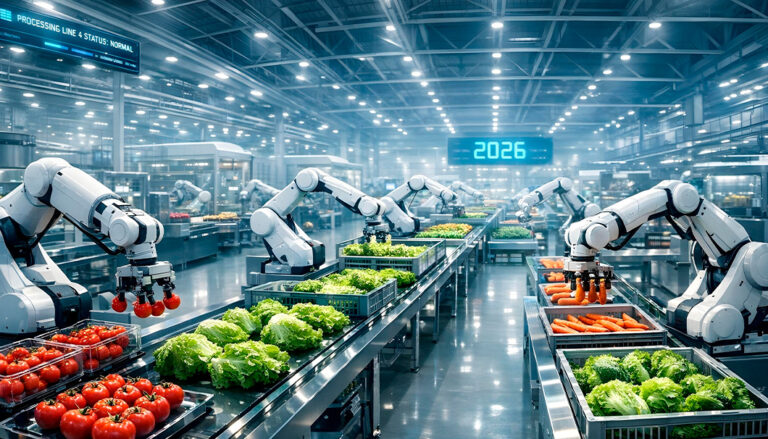
- Scalable automation and autonomous mobile robots or AMR (physical automation): The new AMRs are replacing the old Automated Guided Vehicles (AGVs) due to their ability to navigate autonomously using advanced sensors, mapping, and artificial intelligence. This new generation of warehouse robots can detect obstacles and select alternative routes based on the needs of the environment, among other skills. All of this is coordinated by the WMS (Warehouse Management System) in conjunction with AI. In addition to optimizing work, autonomous robots reduce occupational hazards by performing tasks that are heavy or risky for humans.
- Cloud Computing: Integrates WMS, AI, IoT, and IoWT applications, data analysis, predictive analytics, inventories, among others. By 2026, Cloud Computing is expected to continue to enhance the operational efficiency of warehouses and supply chains across the board.
- Digital Twins and Virtual Reality: These will continue to be at the forefront in 2026, creating virtual scenarios to facilitate decision-making in investment projects, predict transportation and delivery failures, analyze the integration of other technologies, plan facility design, manage storage, among other advantages.
AI and Generative AI: Broadening the Focus and Adding Precision
One of the fundamental characteristics of asset management is to create strategies that anticipate failures. With AI, it is possible to analyze data obtained in real time (IoT integrated with AI) to anticipate not only failures but also demands, making warehouses much more efficient.
In the context of industrial plants, warehouses store and supply parts, materials, supplies, and spare parts. Likewise, warehouses are part of a huge network of services that can range from industrial depots to ports and customs, always with the aim of optimally preserving what is stored and delivering or receiving it safely and efficiently.
AI in the context of warehouse management allows for:
- Use of Big Data to predict demand
- Access to real-time information
- Optimization of supply chain response times
- Diversification of suppliers and performance evaluation
- Historical data and context for decision-making
- Analysis support and reporting (Generative AI)
- Exception detection (Generative AI)
- Predictability (Generative AI) and granular data for management strategies
Projections vs. Reality
Even though the future looks quite promising in terms of the security and operability of industrial and commercial warehouses, Forbes presents several statistics that indicate there is still a long way to go. According to Forbes, a recent study by McKinsey Consulting showed that 70% of logistics and supply chain companies plan to invest approximately $100 million in automation over the next five years. But Forbes also cites the results of a survey conducted by https://www.marketsandmarkets.com/ , according to which only a quarter of warehouses in the United States will have some level of automation by 2027.
Nevertheless, https://www.marketsandmarkets.com/ analysts believe that robotic and automation solutions for warehouses is a market whose global growth is projected to reach $51 billion by 2029.
Regarding stockers and order fillers, the U.S. Bureau of Labor Statistics (BLS) notes: “(…) In addition, only about 20 percent of stockers and order fillers are employed in the warehouse and storage industry, in which the introduction of robots is furthest along. As such, this may be another example in which job diversity within an occupation limits the potential for technological substitution. BLS projects this occupation will grow 0.7 percent between 2019 and 2029, much less than the 10.6-percent growth between 2008 and 2018.” On the other hand, it is worth noting that data analysts will be in high demand in the coming years: “The most notable developments include (…) the emergence of data scientist as a recognized occupation. It seems likely that these trends reflect the increasing need for workers in fields like machine learning and data analytics” – BLS.
This article is brought to you by the Association of Asset Management Professionals (AMP), a non-profit organization whose aim is to create awareness, demand, and knowledge around Asset Management, and to provide professional accreditation and acknowledgment in learning, advancement opportunities, and career development in Asset Management. If you like it, please share it and help us continue to spread the word about our work and the advantages of Asset Management for all organizations and professionals around the world. To learn more about our accreditations and Badges, please visit https://assetmanagementprofessionals.org/
Sources:
- https://www.forbes.com/sites/
- https://www.marketsandmarkets.com/
- https://www.bls.gov/
- https://www.ascm.org/
- www.vrcwarehousetechnologies.es
- https://www.anasoft.com/
- https://www.transvirtual.com/
- https://logisticsviewpoints.com/
- https://datup.ai/
- https://www.slimstock.com/
- https://www.conger.com/warehouse-automation-trends/