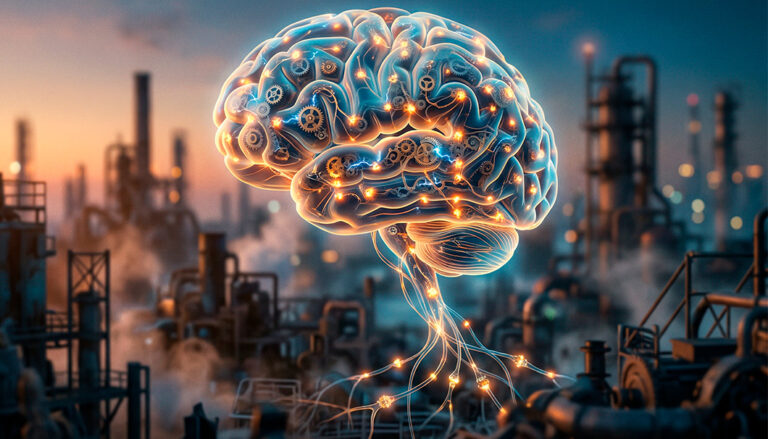

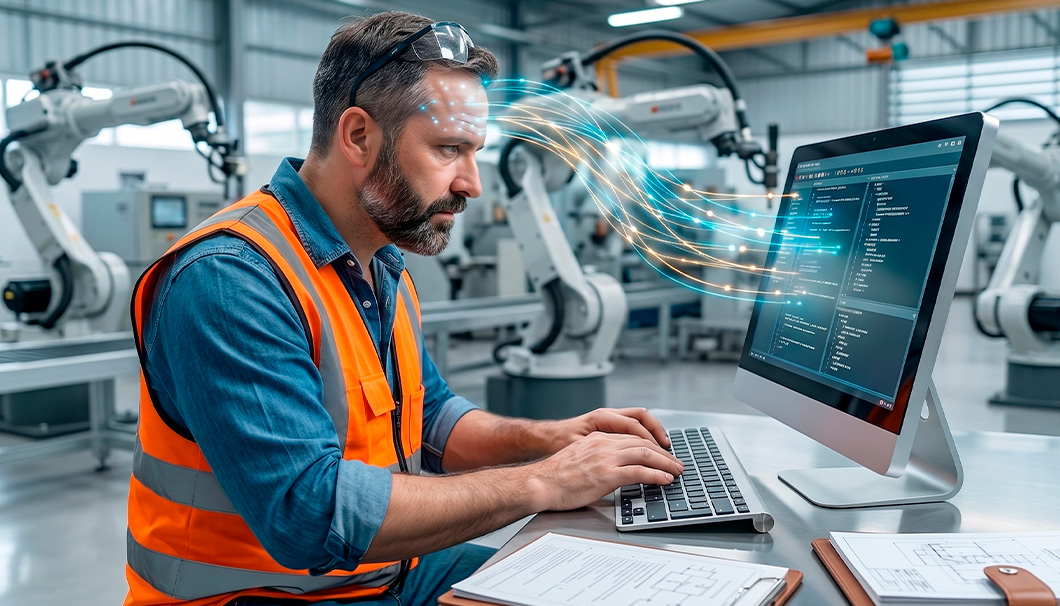
Technology is advancing faster than human capabilities to fully leverage it, and this progress is exponential, meaning that professional profiles are also constantly evolving. Digital skills are now added to the professional skills inherent to the role and the soft skills related to communication and teamwork.
From an asset management perspective, digitization is a sine qua non for economic growth, operational excellence, sustainability and security. Nevertheless, digital tools require people who can leverage them to extract their full potential. In this article, we will explore this aspect of the industry, which is both a challenge and a growing trend.
The impact of digital skills
Digital skills are not the exclusive domain of digital natives, as digitization processes are now a kind of common heritage accessible to all human beings almost everywhere, regardless of age group. The problem is that, unlike other analog tools, digital tools require the development of digital intelligence.
Traditionally, people’s intelligence was measured based on their logical-mathematical and linguistic abilities, which resulted in their Intelligence Quotient (IQ). Then came the theory of Multiple Intelligences (very popular in the 1980s) and the theory of Emotional Intelligence (EQ). Now, digitalization (a constantly expanding phenomenon) has created a new area of study regarding human intelligence: the study and theorization of Digital Quotient (DQ), which is understood as a set of skills that enable one to live and function in the digital world.
In the field of asset management, reliability, and industrial maintenance, digitalization is a cross-cutting factor, present in all aspects of the business, from planning and design to services, end customers, and business ecosystems. It is perhaps the first time in history that knowledge is not received entirely from the previous generation but rather has created a new sphere of knowledge involving all generations, some with more skills than others. But all share the same responsibility: to develop the ability to navigate the digital universe and Artificial Intelligence.
Specifically, the skills of these new profiles are evident in the following areas:
- Data Literacy, interpreting IoT data to inform strategic operational decisions, early fault detection, maintenance plans, CAPEX decisions, among others
- Machine Learning Operations
- Use of Building Information Modeling (BIM), immersive simulations, augmented reality, and other Industry 4.0 tools applicable to industrial maintenance
- Product management with AI
- List Item
- Generative AI and agent-based AI for creating optimized workflows
- Self-learning, continuous training
- Proficiency in digital maintenance platforms
- Creation and assignment of work orders in real time
- Automatic reports, interpretation of KPIs, asset condition indicators
Forget the “that’s how we do it here” mindset, if you want your company to remain in the market for years to come.
It’s no longer just about using CMMS, special Augmented Reality glasses, or having a cybersecurity protocol: the industry needs people who “think digitally.” Technology integration is now present in all professional roles, with a strong emphasis on asset management, industrial maintenance, and facility management. While leadership and communication remain important, professional roles are placing increasingly higher demands on digital skills.
Organizational leadership, AI, and other highly sought-after skills
While not all organizations are advancing at the same pace, there is a more or less widespread culture of the type of technical profile with digital skills that the industry requires. Continuous education and cross-functional training for existing work teams is another challenge for companies that want to stay at the forefront of the market.
What do companies expect from new profiles of engineers and technicians in industrial environments?
- A better understanding of digitalization applied to industrial assets
- Using data to achieve higher levels of operability and safety
- Identifying trends and patterns in asset performance
- Early fault detection through the correct interpretation of IoT data
- Correct calibration of instruments to obtain accurate readings
- Estimation of asset lifespan by interpreting data
- Ability to work in virtual environments
The demand for digital skills will continue to rise across all industries where asset management and reliability are cross-cutting requirements. According to the World Economic Forum’s “The Future of Jobs Report 2025,” the demand for job skills shows clear trends with projections through 2030. Here is a summary:
- Technological skills are becoming more important than any other type of skill
- AI and Big Data are the fastest-growing skills, along with networking, cybersecurity, and technological literacy
- Critical thinking, creativity, resilience, flexibility, and agility are skills in high demand as a complement to technological competencies
- Robots and autonomous systems are also among the main drivers of the fastest-growing jobs
5. Technological expertise, systems thinking, and the ability to collaborate effectively with automated systems are other skills in high demand.
Implementing digitalization in organizations also presents barriers and challenges. According to this World Economic Forum report, 63% of surveyed employers consider skills gaps in the labor market to be the main barrier to business transformation. View the full report here.
A Global Issue
Digital skills are a global issue, they are not exclusive to the asset management industry. Socially and politically, they are the subject of extensive studies and analyses regarding their impact on overall well-being in the near future. International social and economic organizations understand the direct relationship between digitalization, well-being, and progress, which spans industries and services.
In Europe, by 2023, 59% of EU companies had reached at least a basic level of digital intensity. Among SMEs, 58% reached at least a basic level of digital intensity, while the proportion for large companies was 91%. View all the information here.
The EU countries that showed a very high DII (Digital Intensity Index) level were:
- Finland 13.0%
- Malta 11.4%
- Netherlands 11.0
(* The Digital Intensity Index (DII) is a composite indicator derived from the survey on the use of ICT and e-commerce in enterprises).
In Latin America, CEPAL (Economic Commission for Latin America and the Caribbean), one of the five United Nations regional commissions promoting economic and social development in the region, established several priority development areas in its Agenda Digital 2024, including: FOUNDATIONS FOR A DIGITAL ERA FOR ALL (Universal and meaningful infrastructure and connectivity, Digital skills and competencies, Governance, security, and an enabling environment), PRODUCTIVE AND SUSTAINABLE DIGITAL TRANSFORMATION (Digital economy, entrepreneurship, and innovation, Digitalization for sustainability), and DIGITAL TRANSFORMATION FOR WELL-BEING (Digital inclusion for equal opportunities). View the full report here.
Throughout the research conducted for this article, there is clear evidence of the need to increase, raise awareness of, and strengthen the digital skills of all workers in virtually any company, whether in the field of asset management or any other sector. Likewise, other skills such as leadership, resilience, and the ability to think strategically are also key to professional success.
At the Association of Asset Management Professionals, we offer a Certification Pathway designed to strengthen and develop skills that drive knowledge and professional excellence, so that every professional can become a key differentiator within their organization and be part of the solutions that industry and the world at large need. Our Certified Reliability® Leader certification is based on the Uptime® Elements Framework, which includes the Digitalization and IoT Domain (Purple Passport) and serves as a digitalization strategy framework designed to guide organizations in the effective implementation of the Internet of Things (IoT) to improve asset reliability and the management of physical and digital assets. We invite you to explore our certifications, Badges, and Belt Projects—resources we’ve created to help advance the global community of asset management professionals. Learn more about our certifications here.