

In this new year, AI is one of the major scenarios for executive and operational decision-making, but how reliable and robust is the data obtained from the IoT, which is closely linked to the role of AI? Here is an overview of the challenges facing the industry.
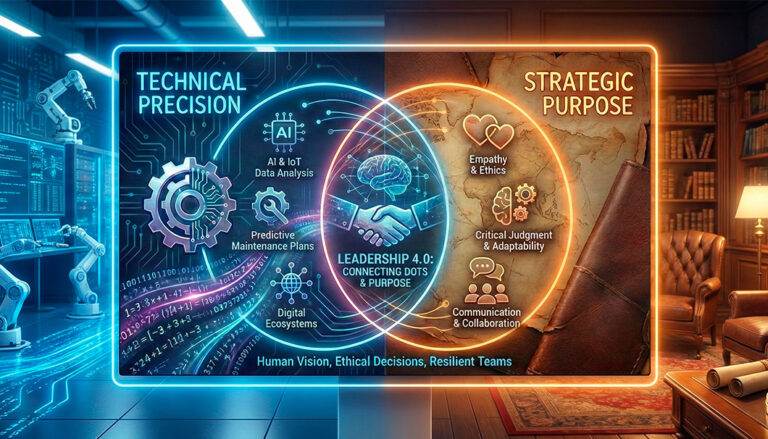
Digitalization, IoT, AI, and Big Data are technologies that have been integrated into asset management over the last decade, accelerating development, business, the reach of products and services, and driving productivity to unprecedented levels. Asset management is enriched and advanced by these technological tools, which make it possible to create highly accurate management strategies with large profit margins. However, challenges remain.
The presence of AI represents the possibility of scaling up operationally and financially, thanks to the constant reception of data that feeds into asset maintenance and lifecycle management strategies. But what happens when the data, which is the essential fuel for these operations, is not well managed from the outset? Poor management of the vast data generated by IoT devices can quickly lead to significant issues. Without proper orchestration, this data deluge can cause serious errors in AI-driven decision-making, which may have severe unforeseen consequences for an organization.
A recent report published by Salesforce, State of Data and Analytics 2025, reflects the difficulty faced by a significant percentage of organizations regarding the fragility of their data, and how this prevents the scaling of enterprise AI. Collecting data is not the same as converting that data into material for business decision-making. Before embarking on enterprise Artificial Intelligence, obtaining, using, and managing the right data is essential. The figures explain the problem:
- 42% of data leaders surveyed admit they do not have full confidence in the relevance or accuracy of the data obtained.
- 57% of data managers surveyed said they did not yet have clear guidelines for ethical AI.
- 93% of business leaders believe that insights are only relevant if they are based on the business context (and serve business objectives).
- 32% of executives surveyed relied on instinctive decisions because they did not have useful or accessible data.
- 80% of data managers surveyed by Salesforce said that governance policies vary depending on the environment or department, pointing to a lack of unified governance criteria that are valid for the entire organization.
What you need to know about data management before starting with artificial intelligence in your organization
Faulty data is dangerous in any field: science, health, social research, business, or engineering. In asset management, misinterpretations of equipment and facility performance based on incomplete, duplicated, data silos, or corrupted data can lead to operational problems, potential accidents, financial losses, or serious failures.
To properly manage the IoT data that will fuel enterprise AI, experts make several recommendations:
- 1. Measure the data that is really important for managing your assets: vibration, temperature, speed, etc. Irrelevant data hinders the asset management strategy and can cause enterprise AI to offer solutions that are not aligned with the organization’s objectives (in the best-case scenario). To find out which data is relevant, start by determining what kind of problems you want to avoid with an asset management approach: unplanned downtime, serious failures, human error, vibration analysis, early fault detection, etc.
- 2. A proper data orchestration system will allow you to organize and prioritize data so that it is useful, discarding irrelevant or repetitive data that is of no value to your asset management strategy.
- 3. Avoid data silos: use centralized data storage platforms, thus facilitating access to data and avoiding duplication. This ensures that you have a “single source of truth” with up-to-date information that can be shared with other departments in the organization.
- 4. Keep the 5+1 Cs of IoT in mind when designing your system:
- a. Connectivity: Ensure a smooth connection between all elements of your digital ecosystem.
- b. Continuity: Systems must operate without interruption.
- c. Compliance: Take standards and regulations into account.
- d. Coexistence: Within your ecosystem, all devices and platforms must operate without interfering with each other.
- e. Cybersecurity: Establish security protocols to protect data and the physical elements (devices, sensors, gateways, connectivity modules) that procure it. Be sure to encrypt data from the sensor to the server (each device is an open flank for hacking and malicious actions; altered data feeding AI poses a danger to any organization).
- f. Customer Experience: This refers to IoT device manufacturers and the type of experience (accessibility, scalability, updates) they can offer their customers. It is advisable to have reliable suppliers of IoT devices, with customizable solutions and technical support.
- 5. Ensure your data is flawless. According to the Salesforce report for 2025, 84% of data and analytics leaders agree that AI results are only as good as the data fed into it, which is closely related to the concept of “Garbage In, Garbage Out.”
- 6. Apply data cleansing strategies. Sensors are physical elements that can suffer from wear and tear, dead batteries, disconnections, misalignments, and other problems. Establish protocols that ensure data governance and the discarding of data that seem impossible or very out of context.
- 7. Establish a solid IoT architecture from the outset. The IoT Architecture consists of several layers: a) detection, b) connectivity, c) data processing, d) user interface or application. This interconnectivity between devices, smart sensors, actuators, cloud services, and protocols makes up the IoT ecosystem. When the architecture is solid and well-structured, it allows all these components to function properly, while also ensuring the scalability and security of both the information and the physical components.
- 8. Other layers of IoT architecture:
- a. Edge/Fog Computing Layer: Processing and storing data close to its source optimizes device performance and reduces latency, which translates into higher performance. In addition, sending all data to the cloud can be costly and time-consuming. Edge computing solves these problems.
- b. Business Layer: Never lose sight of your business objectives and the primary reasons why you need IoT for AI. Ensure that the data obtained by IoT is related to operations, so you can make well-informed executive and business decisions. This seems obvious, but it is practically the initial reason for incorporating these technologies.
- c. Security Layer: We have already mentioned this, but it is a fundamental element in your IoT ecosystem. Symmetric and asymmetric encryption and the application of multiple levels of security protocols will ensure the reliability of your data when sending information to interfaces.
- 9. Select the right platform for your IoT project. There are some very notable platforms on the market, with high data storage and processing capabilities that can be adapted to your business needs. For example, IBM Watson offers analytics with machine learning tools. Always consider reliable providers that guarantee technical support.
Final recommendations
The accuracy of your data is the basis on which AI will make decisions that benefit your business and boost your operational and financial capacity. And for that data to truly be the gold of the 21st century, you need a robust IoT system that guarantees its reliability.
The paradox of Big Data, according to Salesforce’s State of Data and Analytics 2025, is that organizational leaders distrust the data their own devices send, due to flaws in its reliability, accuracy, or relevance. Fifty-four percent of leaders believe that data is inaccessible or difficult to use. In other words, obtaining reliable data in real time is now a priority for companies, which also continue to grapple with the problem of data silos and duplication of work. Creating strategies that facilitate access to real-time information, and ensuring that this information is relevant and accurate will be one of the winning cards that leading companies will play to remain competitive and robust.
Before embarking on an AI strategy, start by having an excellent and reliable IoT system with solid architecture, appropriate platforms, and security protocols.
To expand your knowledge or share information on this topic or other topics related to Asset Management, join as a member the Association of Asset Management Professionals (AMP) and enjoy the benefits of belonging to a growing global community of professionals and experts. Increase your professional presence and value in the job market with the Association of Asset Management Professionals’ certification pathway, which you can find at the following link https://assetmanagementprofessionals.org/certification/.