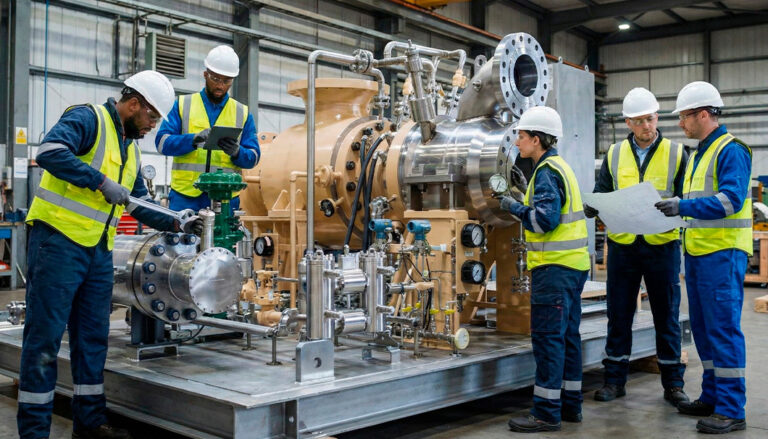

In the food industry, there is no room for error: a mistake can be fatal for millions of people, with an almost insurmountable cost for the company. In this article, we will briefly analyze the trends in industrial maintenance and asset management in the food industry for 2026.
By Alimey Díaz / Specialized Technical Writer & Journalist
Asset Management plays an essential role in fault management, operational excellence, economic robustness, and technological updating for all types of industries and organizations. But when it comes to industries such as food or health, the level of sensitivity and commitment is usually higher.
These types of industries, by their very nature, are closer to the most basic human needs: food and good health. And that is precisely why there is no room for error in the food industry: a mistake can be fatal for millions of people, with an almost insurmountable cost for the company. In this article, we will briefly analyze the trends in industrial maintenance and asset management in the food industry for 2026.
In this type of business, food expiration and safety are critical issues. Preventing food, whether fresh or packaged, from expiring before it reaches the end consumer is one of the central objectives of the business, while also ensuring that it is safe and in good condition for consumption. This is one of the core aspects of the food business: guaranteeing food safety. According to the World Health Organization (https://www.who.int/news-room/fact-sheets/detail/food-safety) , more than 600 million people fall ill after consuming contaminated food and 420,000 die each year. This gives us an idea of how important asset management is in this type of industry.
There are many strategies to ensure the freshness, safety, and traceability of food, as well as quality and safety standards that are constantly being updated. At this point, the optimal functioning of the industrial assets involved in the manufacture, transport, refrigeration, or packaging of food is essential. If unexpected downtime in a manufacturing plant means high production costs and millions in losses, in the case of food manufacturing companies, failures have even more serious implications: contaminated or spoiled food due to temporary suspension of the cold chain, sterilization failures, storage errors, among others.
Let’s look at how asset management strategies are crucial to having a safe, profitable industry that can always meet its objectives, as well as some technological tools that will be trending in 2026.
Technology and Industry 4.0: safety, traceability, and sustainability
In 2026, trends within the food industry, from an asset management perspective, are geared toward leveraging the technological advances of Industry 4.0 to achieve efficient and safe production from both an operational and health standpoint. Many of these tools advance organizations that produce and/or trade food, such as Digital Twins or Augmented Reality.
Internet of Things:
wireless sensors collect constant data on storage temperature, cold chains, and processing machine operation. This real-time data feeds into asset management strategies that keep the industry running and creating safe food for the public, fueling Predictive Maintenance strategies, optimizing repairs, and preventing failures. The IoT impacts the supply chain and offers a global view of the entire business chain, helping to reduce waste and avoid key risks such as food spoilage.
Integration of robot work and the Smart Factory concept:
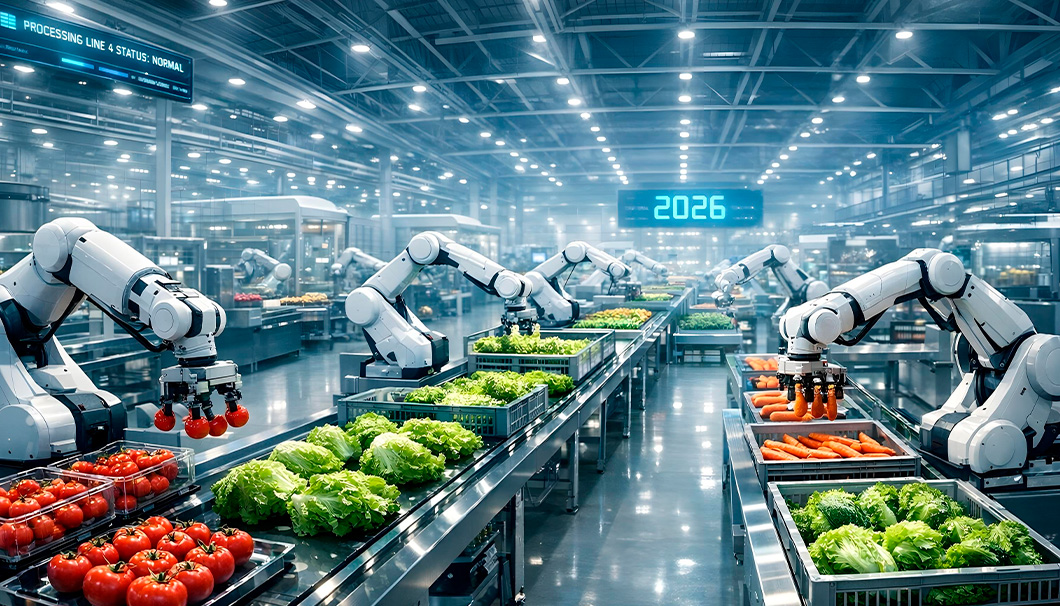
This is a trend that is gaining momentum in the food manufacturing industry. Robotics is a natural evolution of industrial maintenance, as it can undertake tasks that are dangerous or extremely difficult for humans. Robotics within the Smart Factory concept is part of an ecosystem of data, analysis, technical recommendations, and carefully archived and organized records that benefit the food industry and drastically reduces human-induced failure (food contamination, for example), significantly reducing margins of error in a particularly sensitive industry. Both co-bots and computer vision technologies (Augmented Reality) applied to food quality control will be on the rise in 2026.
RFID (Radio Frequency Identification):
Radio frequency identification (RFID) is a wireless technology that allows products to be tracked, and unlike barcodes, it allows hundreds of products to be read simultaneously, stores sensitive food information (temperature, humidity, expiration date), and enables accurate tracking of food from its points of cultivation and delivery (farms, orchards, nurseries) to points of sale in stores and supermarkets. These special food tags are excellent technology for managing large inventories (think, for example, of giant batches of oranges) with high reading speeds, monitoring cold chain data, and managing food freshness (crucial in the meat, fish, and seafood market, for example), supporting advanced logistics and perishable product management functions. RFID tags are usually a little more expensive, but they minimize losses and risks and enable comprehensive product traceability, a highly sought-after feature in global food supply chains.
AI for crop management:
The food industry starts with growing crops and raising livestock. In the case of crops, the use of Artificial Intelligence and Digital Twins allows for the analysis of fields, land, crop conditions, and pest control, as well as environmental conditions such as humidity, soil conditions, water tables, water sources, regional hydrography, invasive species, resistant strains, and many other aspects associated with agriculture, providing valuable data for executive decision-making and creating virtual scenarios on which to calculate possible improvements and protocols for dealing with disasters such as fires or floods. This is a trend that has continued in recent years and will increase in 2026.
Other uses of AI in the food industry:
Real-time contamination detection, digital analysis of ingredients, reduction of energy consumption, reduction of food waste or ingredients used in its manufacture.
Sustainability:
In 2026, customers demand a reliable supply of food products and sustainability certificates. Agriculture, by its nature, is the industry that consumes the most water resources and produces the most deforestation to convert land into cultivable fields, which impacts the carbon footprint and global warming. AI-driven plantations and regenerative agriculture are part of the innovations that the food industry needs to continue functioning and advancing.
Figures and projections
The food industry will continue to grow, for the simple reason that there are more and more people to feed. At the same time, consumers are increasingly aware of health, nutrition, food origin, consumption practices, climate impact, and the health of the planet in general. As a result, industries and organizations in the food cultivation and manufacturing sector are refining their strategies to be not only more productive and profitable, but also more efficient and sustainable. Asset management, reliability, and industrial maintenance provide strategies and tools to make this possible.
To understand the magnitude of the business, here are some figures and projections for the coming years:
- The global food processing market will grow by $395.5 billion by 2034.
- The sustainable agriculture market could reach $34.9 billion by 2034.
- The global personalized nutrition market could reach $60.94 billion by 2034.
- The artificial intelligence market in food processing could reach $22.3 billion by 2032.
Risk mitigation is essential in the food processing industry. Asset Management and new digital technologies applied to industrial maintenance strategies, as well as a Culture of Reliability, guarantee the safety and profitability of a business sector that is essential to humanity. At the Association of Asset Management Professionals, we share knowledge and raise awareness about asset management around the world. On our website, you can see the certifications and badges we offer our global community as a way to support the creation of safe, profitable, and sustainable industries. https://assetmanagementprofessionals.org/certification/
Sources:
- https://www.unleashedsoftware.com/
- https://www.startus-insights.com/innovators-guide/
- https://www.saia.es/https://indualimentario.com/
- https://www.goldenagri.com.sg/https://www.fracttal.com/
- https://www.dimomaint.com/
- https://cpcongroup.ae/
- https://themaintainers.com/